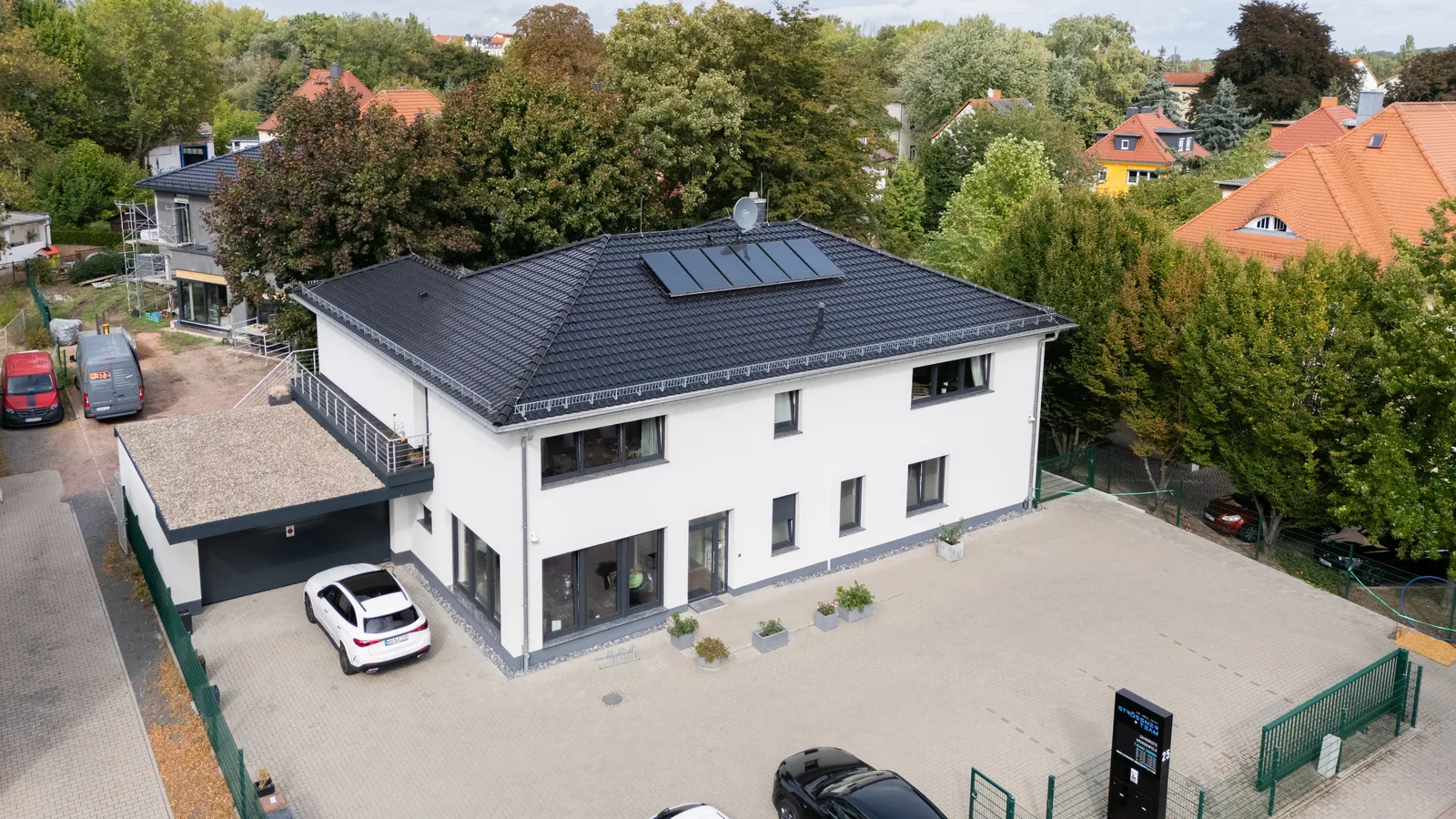
Metal-Free Implants Leipzig · Leipzig

Metal-Free Dental Implants for Leipzig

Dr. med. dent. M.Sc. Sandro Strößner
Metal-Free Implants Leipzig · Leipzig
51.2017° N · 11.9678° E
MMXXVI · Leipzig

The essentials in 30 seconds

— Metal-Free Implants Leipzig · Weißenfels

Who treats you

Dr. med. dent. M.Sc. Sandro Strößner – working in implantology since 2013 · M.Sc. in Oral Implantology and Periodontology – together with the team at Zahnkompetenzzentrum Weißenfels.

First Appointment

Conversation, medical history and examination (3D X-ray if needed) – planning comes first, treatment follows. A purely informational conversation without an examination is free of charge; examination and treatment and cost plan are billed according to the GOZ (the German scale of dental fees).

Costs

A written treatment and cost plan before treatment begins; an initial, non-binding price range is provided by the cost calculator further down.

First Step

Book an appointment around the clock via our online reception (the “Appointment” button), or by phone during opening hours on 03443 339 65 54.

01 — Professional Society
Member of the German Society for Implantology (DGI)
02 — Listing
Listed with the Leading Implant Centers
03 — Experience
Working in implantology since 2013 · M.Sc. Oral Implantology and Periodontology
04 — Patient Voices
★ 4.9 on Google · 216 reviews
Attitude
Many people in Leipzig want to be treated deliberately metal-free, and are looking for an implantologist who doesn't only offer titanium implants.
— Zahnkompetenzzentrum Dr. Strößner
01
01 — Diagnostics

Understanding before we act.

Cone-beam CT scan, intraoral scans, structured assessment. The first appointment isn't treatment — it's a conversation backed by data.

Dentist wearing loupes examining a patient
Quiet · 3D Volume Tomograph 01 / 03
02 — Planning

Digitally planned, thought through backwards.

From the final dental prosthesis back to the surgery. What should exist at the end determines the first step — not the other way round.

A digitally captured jaw shown in CAD software on screen
Quiet · Backward Planning 02 / 03
03 — Execution

Minimally invasive, navigated.

Coordinated by one team under one roof. Surgery, prosthetics, laboratory — nothing handed off, nothing lost in translation.

Dental technician's work matching shade using a shade guide
Quiet · Surgical Still Life 03 / 03
01 — Diagnostics
The Principle

Our Focus Areas — Metal-Free Implants Leipzig & More.

We advise you objectively: sometimes a titanium implant is biomechanically the better solution – and we will tell you so. But where ceramic is indicated and possible, we offer the full range: one-piece, two-piece, in various diameters and lengths.

— scroll horizontally
Explained from everyday practice

Your questions — answered by us.

Short videos in which our team answers the questions we're asked most often. No jargon, no sales pressure.

The videos provide general information and do not replace individual advice or examination. The course and outcome of treatment depend on personal circumstances; medicine offers no guarantee of success. All videos have subtitles.

METAL-FREE

Metal-Free Dental Implants for Leipzig – Dental Restorations Entirely Without Metal

A metal-free dental implant replaces a lost tooth root without introducing any metal into the jaw. In this case, the artificial root is made not of titanium but of a high-strength, tooth-coloured ceramic – usually based on zirconium dioxide, referred to in dentistry for short as zirconia or zirconium oxide. As with a classic implant, the visible restoration is attached to this root: a crown, a bridge, or a fixed restoration. The key difference lies in the material – and for many people, this is precisely the reason they consider implants in the first place.

For patients from Leipzig who deliberately want to avoid metal in the mouth, this is a category of dental prosthetics in its own right. Some have long wanted to make their restorations as metal-free as possible; others feel uneasy about existing metal restorations or report sensitivities and want to avoid this issue from the outset with a new implant. Others again place value, as part of an overall health-conscious lifestyle, on exposing the body to as little foreign material as possible. What they all have in common is the question: can fixed dental prosthetics work without metal? The answer is: in many cases, yes, with zirconium-oxide ceramic implants.

At the Zahnkompetenzzentrum Dr. med. dent. M.Sc. Sandro Strößner, we advise and treat people for whom having metal-free dental prosthetics matters – including many who travel to us in Weißenfels from Leipzig and the surrounding area. The practice is conveniently located south-west of Leipzig in the Burgenlandkreis and is easy to reach by motorway as well as by train. This makes it possible to combine a specialist consultation on metal-free dental prosthetics with a manageable journey. We describe exactly how far the journey is and how to plan your trip in a separate section further below.

What “metal-free” actually means for an implant

The term metal-free means that neither the artificial root nor the restoration placed on top of it contains any metal components. With a ceramic implant, the root is made of zirconium oxide, and the crown is also made metal-free – for example, as all-ceramic. This solution therefore differs both from a titanium implant and from many conventional restorations, in which a metal framework sits beneath the tooth-coloured veneer. Whether a fully metal-free restoration is achievable in your situation depends on several factors, which we discuss in detail during your consultation.

Honest context matters here: being metal-free is a decision about materials, not a promise of success. A ceramic implant is not automatically “better” than a titanium implant – it is a different solution with its own properties that can be particularly well suited to certain wishes and starting situations. We weigh this up together with you, objectively and without steering you in any particular direction.

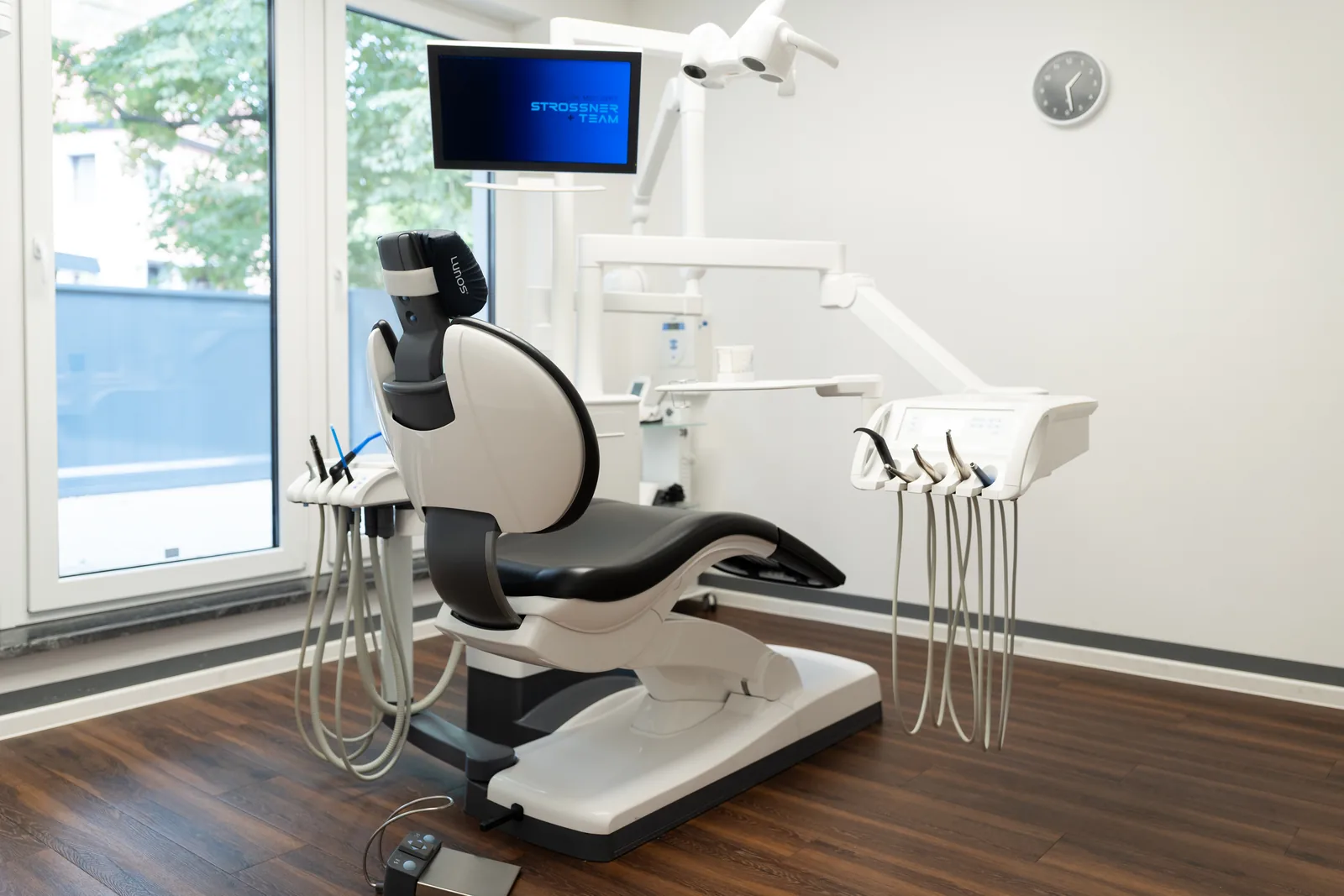
WHY METAL-FREE

Reasons for metal-free dental restorations – allergy concerns, sensitivity, health awareness

The reasons for being interested in a metal-free implant are as varied as the people who ask about them. In consultations, we mainly encounter three motivations, which often overlap. All of them are understandable, and none needs to be justified – it is your body, and your decision, which material you want to carry in your mouth long-term.

Concern about intolerance or allergy

Some people already know from other contexts that they react sensitively to certain metals – for example with costume jewellery, belt buckles, or medical materials. This understandably raises the concern of whether a metal implant in the jaw will be well tolerated. True allergies to the titanium used in implants are considered rare; nevertheless, many people affected prefer, as a precaution, a solution where this question does not arise in the first place. A zirconium-oxide ceramic implant contains no metal and meets this preference. If you already know of any sensitivities, we take this into account during the consultation and discuss which further checks may be worthwhile.

Sensitivities and the feeling of foreign material

Not every reaction is a proven allergy. Some patients report a metallic taste, feelings of irritation, or simply an uneasy feeling about metal restorations, without there being a clear medical finding. We take such subjective impressions seriously too, because the mouth is a very sensitive area. For people with this background, a metal-free, tooth-coloured solution can bring greater peace of mind – and that, too, is a legitimate concern that may be taken into account when choosing materials.

A health-conscious, holistically oriented lifestyle

A growing number of people pay conscious attention to what comes into and onto the body – from diet to cosmetics to medical materials. For these patients, being metal-free expresses a fundamental attitude: as little foreign material as possible, materials that are as body-friendly as possible, and interventions in the organism that are as restrained as possible. Zirconium-oxide ceramic fits this expectation because it is bioinert – meaning it behaves largely neutrally in the body and does not release any metallic components. We place these considerations in perspective factually, without exaggerated promises, and respect your personal approach.

What all three motivations have in common is that none of them calls for a hasty decision. Thinking carefully about the material of your own dental restoration is not a drawback at all – quite the opposite. We take the time to understand your personal reasons and put them into professional context, so that the end result is a solution you can genuinely stand behind.

ZIRCONIA

Zirconia ceramic – the material behind the metal-free implant

For an implant to withstand the chewing forces in the mouth over many years, the material used needs to be both very strong and well tolerated. Zirconium dioxide – technically known as zirconia – meets both requirements and has therefore become established as a material for metal-free implants. It is a high-performance technical ceramic that has nothing to do with the porous porcelain familiar from everyday life. In similar forms, zirconia is also used in other demanding medical applications, because it combines strength with good tolerability in the body.

Properties that define the material

Zirconium dioxide brings with it a range of properties that make it interesting for metal-free dental prosthetics. These explain why people who want to avoid metal often choose this material – without this being intended as a claim of a blanket advantage over other materials.

  • Metal-free: The material contains no metal and releases no metallic components in the mouth.
  • Tooth-coloured: Zirconia is naturally light and tooth-like, so no dark margin can show through at the gum line.
  • High strength: The ceramic is highly resistant to pressure and fracture, and designed to withstand the load of chewing.
  • Bioinert: The material is considered chemically unreactive and well tolerated by the surrounding tissue.
  • Low plaque accumulation: Bacterial deposits tend to adhere less to the smooth ceramic surface, which can make care easier.
  • Temperature-neutral: Unlike metal, ceramic barely conducts heat or cold, which some people find more comfortable.

One-Piece and Two-Piece Ceramic Implants

Ceramic implants come in different designs. In one-piece systems, the artificial root and the abutment, on which the crown later sits, are made from a single piece. Two-piece systems separate the root and abutment, similar to what is familiar from titanium implants, which can allow more flexibility in the prosthetic treatment. Which design makes sense in your situation depends on the location of the gap, the bite, and the planned restoration, and is determined individually. Both variants pursue the same goal: a metal-free, firm hold in the jaw.

As convincing as the properties of zirconium dioxide are, honest advice also includes pointing out that ceramic implants are not equally suitable for every starting situation. The material's properties place particular demands on planning and processing, and long-term experience with ceramic is, overall, more recent than with titanium. We discuss these aspects openly, so that you gain a realistic picture and are aware not only of the advantages but also of the limits.

AESTHETICS & SUITABILITY

Aesthetic advantages, and who metal-free implants are an option for

Alongside the health aspect of being metal-free, it is often aesthetics that lead patients to choose ceramic implants. Particularly in visible areas – that is, at the front teeth, or where the gum is exposed when smiling – the tooth-coloured material can play to its strengths. Whereas, under unfavourable conditions, a metal implant can show a dark shadow through thin or receded gum tissue, this effect does not occur with a light-coloured ceramic. As a result, the outcome blends more inconspicuously into the row of teeth in many cases.

Why especially in the front-tooth area

In the front-tooth area, a natural appearance depends on the interplay of tooth, gum, and light. The gum tissue here is often thinner, and even small differences in colour stand out. A tooth-coloured root made of zirconium oxide provides a lighter base for the crown placed on top and can contribute to a harmonious transition at the gum line. For people who value an unobtrusive smile, this is a significant argument – although the actual aesthetic result always depends on individual anatomy and careful execution, and cannot be promised as a general rule.

Who metal-free implants are especially interesting for

Ceramic implants are for anyone who cares about being metal-free – whatever the reason. This solution is particularly often considered for the following groups. Whether it is actually feasible in an individual case only becomes clear after examination and consultation.

  • People who specifically want treatment that is entirely metal-free.
  • Patients with known sensitivities or concerns about metal intolerance.
  • Health-conscious people with a holistic lifestyle who want to reduce foreign material in the body.
  • Restorations in the visible front-tooth area with high aesthetic standards.
  • People with thin or receded gums, where a metallic sheen should be avoided.
  • People who value a smooth, tooth-coloured surface and good ease of care.

When a more careful assessment is needed

As with any implant, there are situations that call for especially careful planning. These include limited bone volume, pronounced nightly teeth grinding, certain bite situations, or jaw growth not yet complete in younger people. Such factors do not necessarily rule out a ceramic implant, but they do influence the choice of system and the treatment pathway. During your consultation in Weißenfels, we assess your circumstances and tell you openly whether a metal-free solution can sensibly be achieved in your case, or whether other approaches would be better suited.

DIRECTIONS FROM LEIPZIG

From Leipzig to Weißenfels – a short journey to a metal-free-oriented practice

Specialist advice on metal-free implants does not necessarily have to be found in your own town. Many patients are happy to accept a manageable journey in return for care that matches what they are looking for. The Zahnkompetenzzentrum Dr. med. dent. M.Sc. Sandro Strößner is located in Weißenfels in the Burgenlandkreis – south-west of Leipzig, and therefore easy for patients from Leipzig to reach. Anyone travelling once per treatment phase often combines the appointment with a trip to the attractive town on the Saale anyway.

By Car

From Leipzig, the route to Weißenfels mostly runs via the A9 and A38 motorways, or via the federal roads heading south. Depending on the part of the city you're starting from and the traffic situation, the practice is usually reachable by car in around 45 minutes. We recommend allowing a little buffer time, especially for your first detailed consultation, so that you arrive relaxed. Parking near the practice makes the journey easier; we are happy to give you further details when you book your appointment.

By Train

Weißenfels is also well connected without a car: regional trains run regularly between Leipzig main station and Weißenfels, covering the route in a comparatively short time. From Weißenfels station, you can reach the practice within the town without any difficulty. Travelling by train is a relaxed alternative, particularly for consultations and check-up appointments, as you do not need to worry about traffic or parking.

Treatment from a single source – saving you journeys

A key advantage for anyone travelling in from outside the area: at our practice, consultation, diagnostics, planning, the procedure, prosthetic treatment, and aftercare all come together at a single location. This means you do not have to travel between several practices, and individual steps can be scheduled to fit together well. Where sensible and possible, we plan appointments so that, as a patient from Leipzig, the journey is worthwhile and does not need to be made unnecessarily often. The exact number of appointments depends on your individual treatment and can be estimated well after diagnostics.

If you would like to come to us from Leipzig, feel free to mention your journey when booking your appointment. We take this into account when planning appointments and try to keep things as straightforward as possible for you. You can reach us by phone on 03443 339 65 54.

ABLAUF

The Treatment Process for a Metal-Free Implant

Treatment with a ceramic implant is a planned process that extends across several appointments. Between individual phases lie deliberately chosen healing periods, during which the tissue settles. The following overview shows the typical course – the specific order and duration always depend on your personal situation and may vary in individual cases. For patients travelling from Leipzig, we coordinate appointments with your journey as far as possible.

  1. Initial consultation and understanding your reasons: We discuss your wish to avoid metal, examine your mouth, and record your medical history, any known sensitivities and your medications.
  2. Diagnosis and planning: Using X-ray imaging and, if needed, three-dimensional imaging, we assess the bone, nerve pathways and neighbouring structures and plan the position, size and axis of the ceramic implant.
  3. Material consultation: We explain the properties of zirconia, clarify the appropriate design of the ceramic system, and discuss whether a fully metal-free restoration is achievable in your case.
  4. Explanation and cost plan: You receive a written treatment and cost plan along with a thorough explanation of the procedure, alternatives and possible risks, so you can decide without any pressure.
  5. Preliminary treatment, if necessary: Any gum inflammation is treated first; if there is insufficient bone, augmentation can be carried out beforehand.
  6. Placing the ceramic implant: In a procedure usually carried out on an outpatient basis under local anaesthetic, the implant is inserted into the jawbone. On request, the treatment can be accompanied by sedation.
  7. Healing phase: Over several weeks, the bone grows onto the implant. During this time, a temporary restoration can be worn, depending on the situation.
  8. Fitting the metal-free crown: Once healing is complete, the implant is prepared for restoration and the tooth-coloured, metal-free prosthesis is attached, checked for bite and fine-tuned.
  9. Aftercare and check-ups: At regular appointments, we check the fit, the gums and your hygiene, to support the implant over the long term.

A solid foundation that can support the later restoration matters more to us than keeping treatment time as short as possible. Whether individual steps can be combined depends on bone quality, the stability achieved by the implant, and its position in the jaw, and is carefully assessed on a case-by-case basis. Before every major step, we explain what happens next and what to watch out for at home, so that you keep a clear overview of the process.

Advantages of Metal-Free Implants at a Glance

Many patients find metal-free zirconia implants a coherent solution, as they combine the wish for metal-free treatment with fixed, aesthetic dental restorations. The following points summarise why ceramic implants can be of interest in many cases – always provided that the individual circumstances are suitable and suitability has been professionally assessed.

  • Completely metal-free – neither the root nor the crown contains any metal components.
  • Tooth-coloured material that doesn't cause a dark shadow to show through at the gumline.
  • Good tolerability thanks to bio-inert, chemically neutral zirconium dioxide.
  • Aesthetic advantages, especially in the visible front-tooth area and with thin gum tissue.
  • A smooth ceramic surface, to which bacterial plaque tends to adhere less.
  • Protecting healthy neighbouring teeth, since – unlike with a bridge – they don't need to be ground down.
  • A secure fit while chewing, speaking and laughing, with nothing slipping.
  • Preservation of the jawbone, which continues to be exercised through the load transmitted via the implant.
  • A solution that can fit with a health-conscious, holistically oriented lifestyle.

An honest comparison

A fair account includes acknowledging that ceramic implants are not the right choice for every situation. Experience with titanium implants goes back decades and is more extensive overall, and in certain anatomical situations a different approach may make more sense. A ceramic implant is therefore not a solution that is generally superior, but one that works particularly well given the right conditions and a corresponding wish to be metal-free. We weigh this up together with you, transparently and without pressure – the final decision is always yours.

COSTS & INSURANCE

Costs, insurance cover and your consultation

The cost of a metal-free implant depends on several factors: the number of implants, the ceramic system used, the type of dental prosthetics, and whether bone augmentation or other preparatory treatment is needed. For this reason, no flat-rate price can be given. Before treatment begins, we provide you with a written, easy-to-understand treatment and cost plan listing every item – giving you a clear basis for your decision, with nothing left unclear.

We understand that the financial side plays an important role. That's why we discuss together which treatment makes medical sense while also fitting your means, and explain the treatment and cost plan item by item. On request, we also discuss possible payment arrangements, so the treatment remains easy to plan for.

Statutory health insurers pay a fixed subsidy for dental prosthetics based on the diagnosis, calculated against standard care. As implant-supported, metal-free dental prosthetics usually go beyond standard care, an out-of-pocket share generally remains; the subsidy is based on the diagnosis, not on the material chosen. Keeping a bonus booklet regularly and without gaps can increase the subsidy. Privately insured patients and those with supplementary insurance should clarify reimbursement with their insurer in advance, as conditions vary by tariff. We are happy to prepare a treatment and cost plan for you that you can submit to your health insurer before treatment begins – simply get in touch with us on 03443 / 339 65 54.

Advice for patients from Leipzig

If you are considering a metal-free implant, or are unsure whether this solution is right for you, a personal consultation is the best first step. During this, we look at your situation, listen to your reasons for wanting a metal-free solution, answer your questions and show you the possible options – objectively, clearly and without time pressure. For patients from Leipzig, we take the journey to Weißenfels into account when arranging appointments.

The Zahnkompetenzzentrum Dr. med. dent. M.Sc. Sandro Strößner in Weißenfels is here for patients from the region and beyond – from Leipzig to Naumburg, Zeitz and Merseburg, as well as across the Burgenlandkreis. Feel free to book an appointment by phone on 03443 339 65 54. We take the time to understand your needs and support you on the way to your metal-free dental restoration.

Portrait Dr. med. dent. M.Sc. Sandro Strößner
Dr. med. dent. M.Sc. Sandro Strößner

Ceramic Implants approx. 45 minutes' drive south of Leipzig

Many people from Leipzig deliberately want metal-free treatment and are looking for an implantologist who doesn't only offer titanium implants. Our Zahnkompetenzzentrum in Weißenfels specialises in ceramic implants and cares for patients from Leipzig and the whole region.

Why metal-free? Zirconium dioxide is biocompatible, does not generate galvanic currents, does not irritate soft tissue, and does not show through even with dark gum tissue. For sensitive individuals, patients with metal allergies, or those who think holistically, it is the rational choice.

Dr. med. dent. M.Sc. Sandro Strößner — Weißenfels, MMXXIII
— Practice Video · 02:14 Weißenfels / Sachsen-Anhalt
00:00
02:14

Voices that have stayed.

— Excerpts from patient conversations
01 — Voice

What convinced me was the absence of marketing. No promises. Just planning, explanation, execution. I had eight implants placed and didn't even feel like I'd made a difficult decision.

— A. H. · written patient feedback, held on file at the practice
02 — Voice

I was an anxious patient for fifty years. Today, I am no longer one. Not because my anxiety has disappeared, but because this team took it seriously, without ever making a drama out of it.

— K. M. · written patient feedback, held on file at the practice

Questions, answered calmly.

— Before your first appointment
A metal-free dental implant replaces a missing tooth root without introducing metal into the jaw. The artificial root is made of a high-strength, tooth-coloured ceramic based on zirconia. The crown that sits on top is also made metal-free, so that the entire restoration is free of any metal components.
They are made of zirconium dioxide, usually called zirconia or zirconium in dentistry. This is a high-performance technical ceramic that is very strong and, at the same time, well tolerated. This material has nothing in common with the porous porcelain of everyday items; it is designed for the sustained load of chewing.
They are of particular interest to people with an explicit wish for metal-free treatment, concerns about intolerance, known sensitivities, or a health-conscious, holistically oriented lifestyle. They can also offer aesthetic advantages in the visible front tooth area. Whether a ceramic implant is suitable in an individual case is something we clarify during the consultation.
This cannot be said in general terms. Ceramic is metal-free and tooth-coloured, and can offer advantages where this is specifically desired or in visible areas. Titanium has been proven over decades and has a more extensive evidence base. Which material suits your case depends on position, aesthetics, available bone and your personal preferences, and is discussed individually.
A ceramic implant made of zirconium oxide contains no metal, so the question of a metal intolerance does not arise with this material. Genuine allergies to the titanium used in implants are considered rare; nevertheless, some people wish to choose a metal-free solution as a precaution. Where sensitivities are already known, we take this into account in the consultation and discuss sensible further investigations.
By car via the motorway, the practice in Weißenfels can usually be reached from Leipzig in around 45 minutes, depending on the part of town and traffic conditions. Weißenfels is also well connected by regular regional trains from Leipzig main station. For your first consultation, we recommend allowing a little extra time as a buffer.
Many patients are happy to accept a manageable journey for treatment that matches their wish for metal-free materials. At our practice, consultation, diagnostics, the procedure, treatment and aftercare all come together at one location, so you do not have to travel back and forth between several practices. When scheduling appointments, we take your journey from Leipzig into account.
In the front tooth area, tooth-coloured ceramic can play to its strengths, as no dark shadow can show through thin or receded gums. As a result, the outcome often blends more unobtrusively into the row of teeth. However, the actual aesthetic result always depends on the individual anatomy and careful execution.
After the initial consultation, diagnostics and material consultation, you receive a treatment and cost plan. Following any necessary preliminary treatment, the ceramic implant is placed under local anaesthetic and heals over several weeks before the metal-free crown is fitted. Regular aftercare then follows. The exact sequence depends on your individual situation.
As with any implant, thorough daily oral hygiene and regular check-ups are crucial for its long-term survival. Bacterial plaque tends to accumulate less on the smooth ceramic surface, which can support your care routine. We will show you which aids are suitable for the spaces between teeth and how often check-up appointments make sense.
For dental restorations, statutory health insurers pay a fixed subsidy based on the findings, which is oriented towards standard care rather than the material chosen. As metal-free, implant-supported dental restorations generally go beyond standard care, a personal contribution usually remains. A dental bonus booklet (Bonusheft) kept without gaps can increase the subsidy; privately insured and supplementary-insured patients are best advised to clarify reimbursement with their insurer in advance.
Around the clock via our online reception (the “Appointment” button) or by phone during opening hours on 03443 339 65 54. In a personal consultation, we look at your situation, listen to your reasons for wanting a metal-free solution, and show you the possible restorations. For patients from Leipzig, we take the journey to Weißenfels into account when scheduling appointments.
A Look Inside Our Practice

How we work — X-Guide precision

Computer-guided implant placement in real time. See how calm, precise and safe an implant procedure at our Zahnkompetenzzentrum looks.

▶ Watch video with sound
X-Guide 3D navigation · up to 11× higher angular accuracy (manufacturer's figure, X-Nav) · Zahnkompetenzzentrum Dr. Strößner

Cost calculator · in 1 minute · no obligation

What does my dental implant cost — worked out honestly.

No one should have to worry about hidden costs. Answer a few short questions and you'll immediately receive a transparent price range for your situation — complete with a clear breakdown and possible monthly instalment.

  • Instant result — with no form or registration required
  • Runs entirely on your device: no storage, no cookies
  • 3D-planned, generally X-Guide-navigated & tissue-friendly · Circle of Implantology (continuing education group, conference chaired by Dr. Strößner)
A Beginning

One appointment. One conversation. And you'll notice the difference.

Book an appointment
Call
Appointment
Everything in one placeAppointments, questions, etc.